On 18 August 1590, Governor John White waded ashore on Roanoke Island, off the coast of what is now North Carolina. Three years had passed since he had left the settlement there, on what was meant to be a brief voyage to England for supplies. He had left behind more than a hundred men, women and children, including his daughter Eleanor and his infant granddaughter Virginia Dare.
As his party climbed a sandy bank, they found fresh footprints but met no one. A tree bore the carved letters "CRO", and a post of the settlement's palisade bore the word "CROATOAN" in capital letters, with no cross beside it. The houses had been taken down, the settlement was enclosed by a defensive fence, and the colonists were gone.
The Mystery
The colony White found missing was England's second attempt to settle Roanoke Island. The first, a military outpost of about a hundred men under Governor Ralph Lane in 1585, had been evacuated in 1586 after relations with the local Algonquian peoples broke down and supplies ran short. The men returned to England with Sir Francis Drake, and a small detachment left behind by Sir Richard Grenville was never seen again.
The second colony was different in kind. It was meant to be a permanent community of families who would own land, not a garrison of soldiers. About 115 men, women and children sailed in 1587 under John White, with the intention of settling at Chesapeake Bay, where the harbour was better. The fleet's pilot, Simon Fernandes, set them down at Roanoke instead and refused to take them farther.
Within weeks of their arrival, White's daughter Eleanor gave birth to a girl named Virginia Dare, on 18 August 1587, the first English child known to have been born in the Americas. The colonists then persuaded White to sail back to England to arrange for supplies, and he left in late 1587 expecting to return within months. He would not see Roanoke again for three years.
What Is Known
Roanoke Island was not empty land when the English arrived. Carolina Algonquian peoples had lived on the Outer Banks for more than a thousand years, according to the National Park Service. The Roanoke people lived on the island itself, and the Croatoan people lived on the island the English called Croatoan, today Hatteras Island, to the south.
The 1587 colonists depended on these neighbours for food and knowledge, and relations were strained from the start. Soon after the colonists arrived, a settler named George Howe was killed. The English blamed the Roanoke people and attacked a group on the mainland, but those people were in fact friendly Croatoan, and the attack was stopped by Manteo, a Croatoan man who spoke English and worked with the colonists.
Manteo had travelled to England with an earlier voyage and had returned with the 1587 expedition. He was baptised soon after the colonists arrived, and he remained their most important intermediary with the Indigenous peoples of the coast. His presence is one reason historians take seriously the possibility that the colonists eventually joined a Native community rather than dying where they stood.
The Timeline
In 1584, Queen Elizabeth I granted Sir Walter Raleigh a patent to settle lands not held by other Christian rulers. A reconnaissance voyage that summer reached the Outer Banks and returned with glowing reports, along with Manteo and Wanchese, two Algonquian-speaking men who travelled to England and learned English.
The first colony followed in 1585, under Ralph Lane, with the scientist Thomas Harriot and the artist John White among its members. Harriot's studies and White's watercolours remain among the most important records of early contact in North America. Lane's colony collapsed within a year, and the men left with Drake in June 1586.
The second colony landed on Roanoke in July 1587. Virginia Dare was born on 18 August, and White sailed for England later that month. In 1588, England faced the Spanish Armada, and the government kept ships at home for national defence.
White set out that year on two small vessels, but they were attacked at sea and forced back. Only in 1590, aboard a privateering expedition, did he finally reach the Outer Banks again, landing on 18 August, his granddaughter's third birthday.
Available Evidence
What White found on 18 August 1590 is the whole of the direct evidence, and it is worth stating precisely. The settlement was fortified with a palisade that had not existed when he left, which suggests the colonists had prepared for an enemy attack. The houses had been taken down rather than burned or destroyed, which suggests a planned departure rather than a massacre.
The carvings were a prearranged code. White had instructed the colonists that if they left the island, they should carve their destination into a tree or post, and that they should add a cross if they left in an emergency. The word CROATOAN appeared without any cross or sign of distress, and the letters CRO appeared on a nearby tree. White read this as meaning the colonists had moved to Croatoan Island, about fifty miles to the south.
The colonists had also left their heavy belongings behind, including chests and ironwork, buried or stored in pits. White's men dug up some of these and found them spoiled by weather. The colonists, in other words, had travelled light, as people do when they expect to be taken in by others rather than to build a new town in the wilderness.
Investigations and Explanations
White was unable to follow the clue. Rough seas and a lost anchor forced the expedition to leave, and the captain was more interested in privateering against Spanish shipping than in searching for settlers. White never returned to the New World, and he never learned what had happened to his daughter and granddaughter.
Later searches produced reports but no proof. In 1602, Raleigh sent a party that found nothing new. After Jamestown was settled in 1607, its colonists heard reports of Europeans living among Native peoples on the Carolina mainland, and John Smith heard similar accounts, but search parties found no physical evidence of the colonists' fate.
The explanations historians now weigh are more ordinary than the legend suggests. The colonists may have moved to Croatoan Island and been absorbed into the Croatoan community, as the carving indicates. They may have split up, with some going to Croatoan and others moving inland, as White himself noted they had originally intended.
They may have died of disease, hunger, or conflict in the years after 1590, leaving no trace that archaeology has yet found. A star-shaped symbol found under a patch on a sixteenth-century map, discovered when curators backlit it, has led some researchers to look for a fort site inland, but that reading remains unproven.
What Remains Unresolved
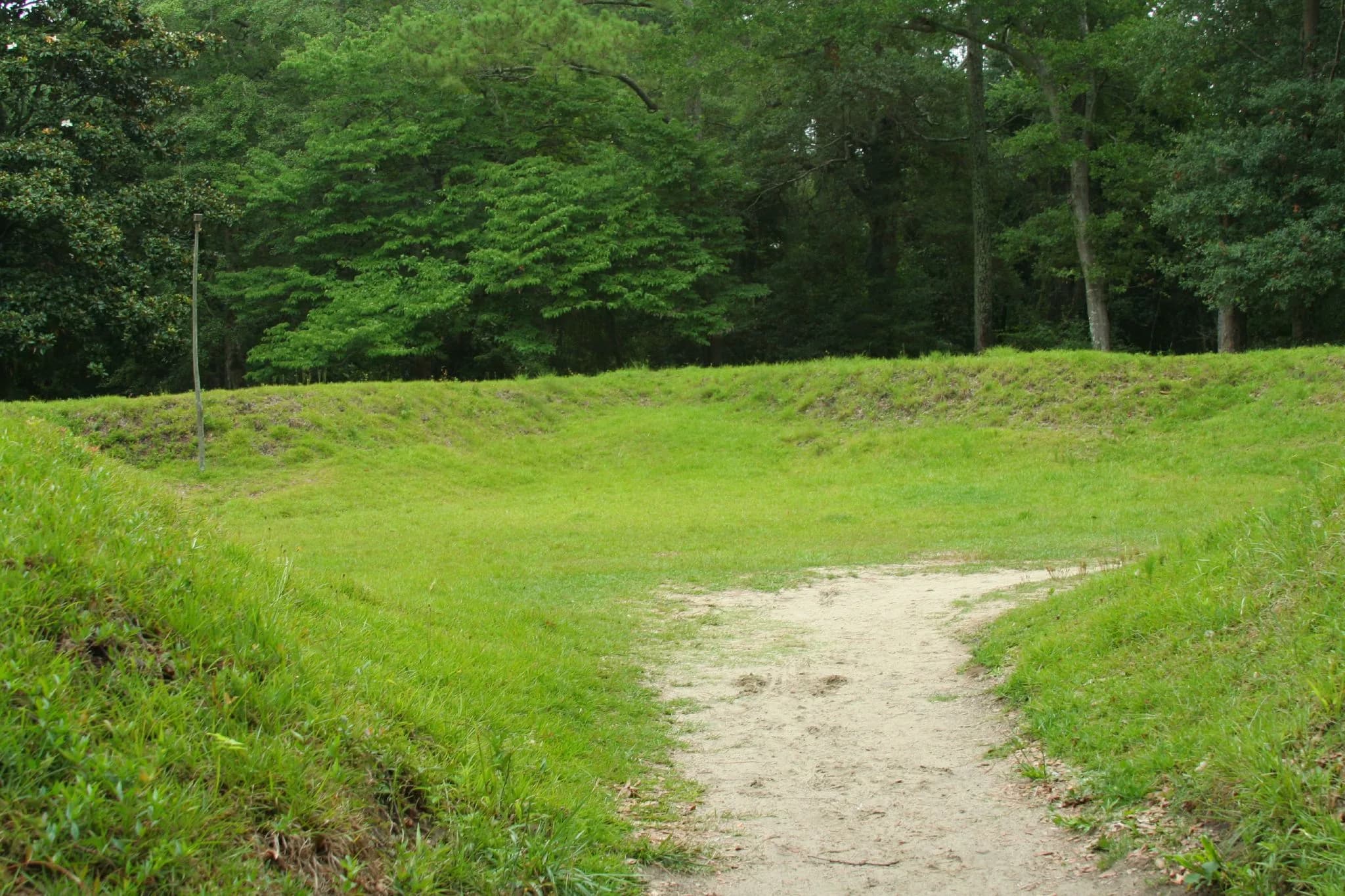
No document, grave, or settlement has ever been found that can be tied with certainty to the 1587 colonists. Excavations at Fort Raleigh, designated a National Historic Site in 1941, have confirmed the site of Lane's fort of 1585, but the village site of the 1587 colony has not been located. Archaeological work continues on Roanoke Island and at sites on the mainland, and each season produces finds that are suggestive rather than conclusive.
The fate of the Lost Colony has become one of the most enduring puzzles in American history, surrounded by legends, hoaxes and theories of every kind. The real story, as far as the evidence goes, is less strange and more human: a fragile settlement, a war in Europe that cut off its supplies, and Indigenous neighbours whose own history was bound up with the newcomers.
What is known is that about 115 people built a fortified settlement, took their houses down, and left a single word behind. What is not known is where they went, how long they lived, and whether any of their descendants are among the Native peoples of the Carolina coast today. The word CROATOAN is still the best evidence anyone has, and after more than four centuries it has still not given up its answer.