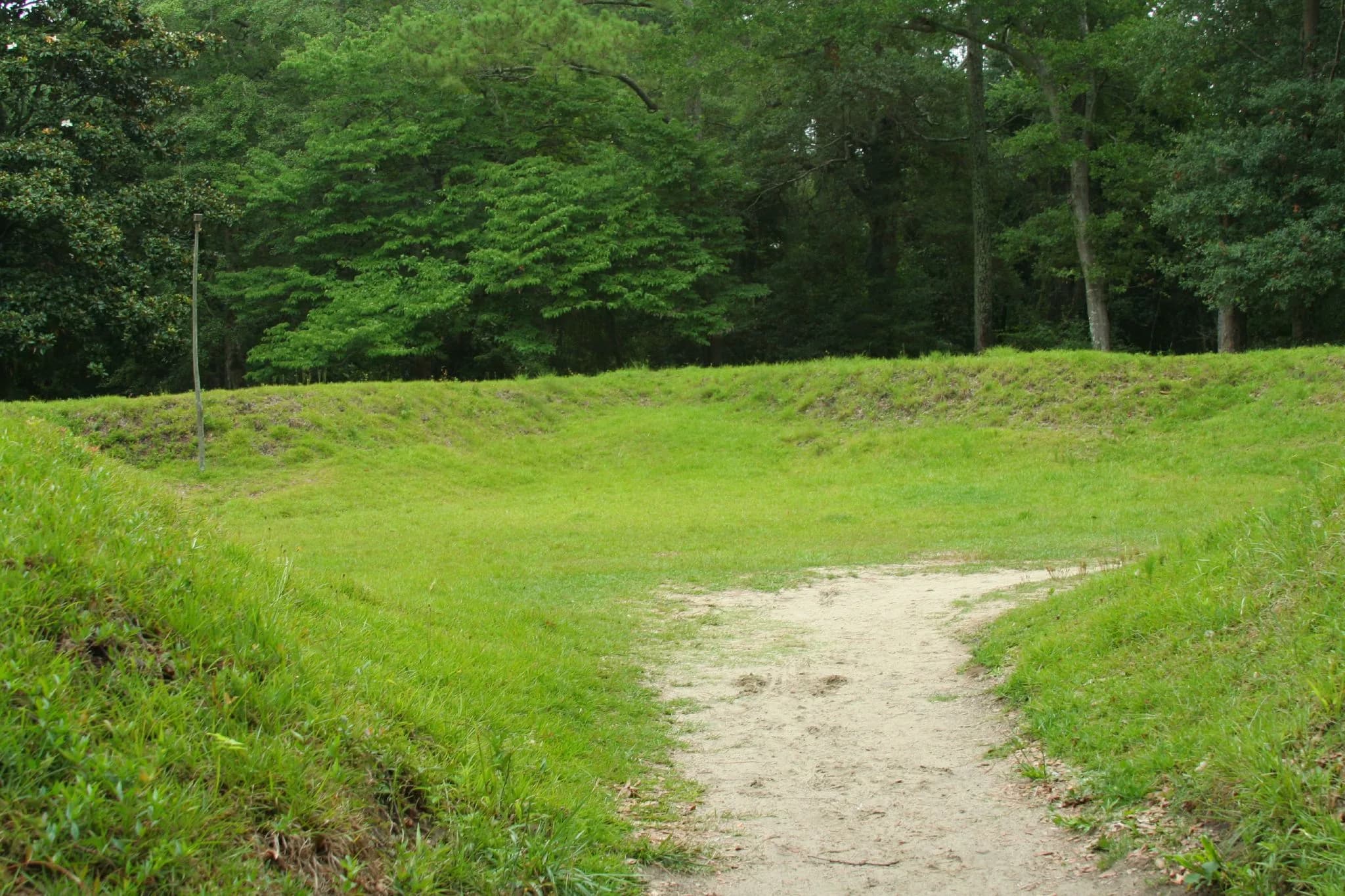
On 1 February 1959, nine experienced ski hikers pitched their tent on the open eastern slope of Kholat Syakhl, a bare, wind-scoured mountain in the northern Urals. The mountain's name, in the language of the region's Indigenous Mansi people, is usually translated as Dead Mountain. The group had planned to cross a pass toward Mount Otorten, and the tent was pitched at about five in the afternoon, on the mountainside rather than in the forest below.
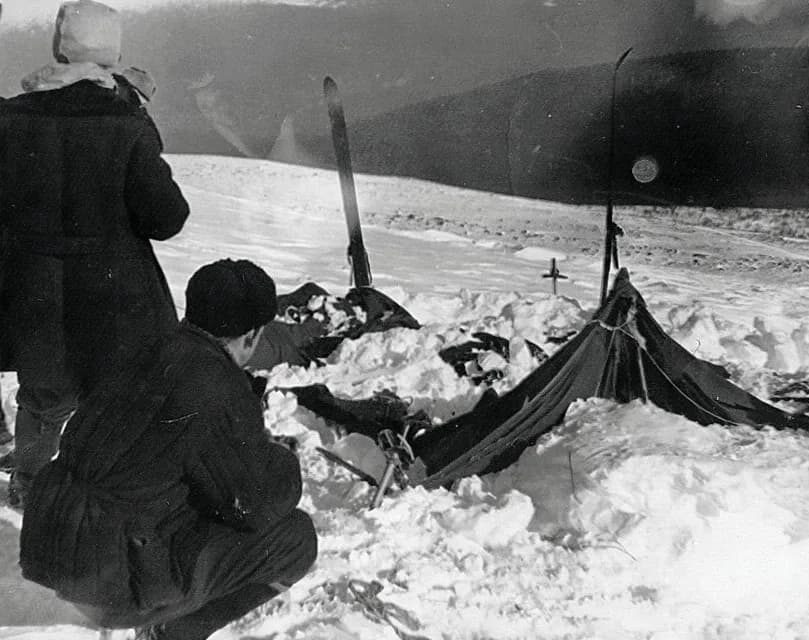
No telegram came when the group was expected to report. By 20 February, relatives were demanding action, and the institute sent out volunteer search parties, soon joined by soldiers, police and local Mansi hunters. On 26 February, a search party led by the student Boris Slobtsov found the tent, half collapsed under snow and cut open from the inside. The nine hikers were never heard from again.
The Mystery
The group came from the Ural Polytechnic Institute in Sverdlovsk, the industrial city now called Yekaterinburg. Its leader, Igor Dyatlov, was a 23-year-old radio engineering student. With him were Yuri Doroshenko, 21; Lyudmila Dubinina, 20; Georgy Krivonishchenko, 23; Alexander Kolevatov, 24; Zinaida Kolmogorova, 22; Rustem Slobodin, 23; Nikolai Thibeaux-Brignolles, 23; and Semyon Zolotaryov, 38, an outdoor instructor and war veteran who had joined the party late.
Ten people had set out on 23 January, but one, Yuri Yudin, had turned back with joint pain, and the remaining nine continued. The plan was a winter ski trek of roughly 300 kilometres, which would qualify the participants for the Soviet Union's highest hiking certification, Grade III. The group was young, fit and experienced, and they kept diaries and took photographs that were later recovered.
What the searchers found did not fit any ordinary accident. The tent had been cut open from the inside with knives, and the group had fled downhill toward the tree line, most of them without boots, coats or hats, in temperatures investigators estimated at minus 25 to minus 30 degrees Celsius, with strong winds. Their belongings, clothing and food were still inside the tent.
What Is Known
The searchers found the first bodies on 27 February, under a large cedar tree about a mile from the tent. Doroshenko and Krivonishchenko lay beside the remains of a small fire, both dressed only in their underwear, and branches of the cedar had been broken, apparently to fuel the fire. Between the cedar and the tent, spaced out as if returning uphill, lay Dyatlov and Kolmogorova. Slobodin was found on 5 March, between them.
The remaining four were not found until the thaw. On 4 May 1959, searchers probing a ravine beyond the cedar uncovered Dubinina, Zolotaryov, Kolevatov and Thibeaux-Brignolles under about four metres of snow, lying on a platform of branches. Unlike the others, three of them had severe injuries, and some were wearing clothing taken from their companions.
The autopsies, performed in the town of Ivdel, gave the investigation its central puzzle. Six of the nine had died of hypothermia. One victim had major skull damage, two had severe chest trauma, and another had a small crack in his skull. Four of the bodies found in May had damaged soft tissue of the head and face: two were missing eyes, one was missing its tongue, and one was missing its eyebrows.
The Timeline
The expedition set out from Sverdlovsk on 23 January 1959 and travelled by train and truck to the abandoned North-2 mining settlement, the last point of contact with the outside world. From there the group skied north, and on 1 February they climbed onto the slope of Kholat Syakhl and pitched their tent. The diaries and camera film recovered later show a group in good spirits, making camp in the late afternoon.
The deaths occurred on the night of 1 to 2 February, though no witness survived to record the hour. A criminal case was opened on 26 February under the investigator Lev Ivanov, the day the tent was found. The first five bodies were recovered between 27 February and 5 March, and the remaining four were found on 4 May.
The investigation closed three months later, in May 1959, with the conclusion that a "compelling natural force" had caused the deaths. The area was closed to visitors for three years.
For sixty years the case sat in a closed file, in a closed region, in a closed country, and rumour filled the space where the record should have been. The file was not fully opened to researchers until the post-Soviet period, and the photographs, diaries and autopsy reports that are now public were for decades available only in fragments. That long silence is a large part of why the case became a legend.
Available Evidence
The tent is the most important single piece of evidence. It was found half buried in snow, with cuts made from the inside, and footprints leading downhill toward the tree line about a mile away. The cuts show that the group left in a hurry, through the fabric of their own shelter, rather than through its entrance. Most of the group's belongings remained inside, which shows they expected to return, or had no time to dress.
The injuries are the second piece of evidence, and they are the hardest to explain. The chest injuries of Dubinina and Zolotaryov were severe, comparable to the force of a car crash, yet there was little external damage to the skin. Thibeaux-Brignolles had a major skull fracture. These injuries were not typical of avalanche victims as the subject was understood in 1959, and they are the reason the case resisted a simple explanation for so long.
The soft-tissue damage found on the May bodies has a separate, less mysterious explanation. The four lay in running water in a creek for weeks, and the missing eyes, tongue and eyebrows are consistent with decomposition in water and scavenging by small animals. The investigators of 1959 recorded the damage faithfully, and later writers treated it as evidence of violence, but the condition of bodies left in a stream explains it without any further cause.
Investigations and Explanations
The 1959 investigation considered many possibilities and settled on none of them in detail. Its conclusion, that a "compelling natural force" caused the deaths, named no mechanism and satisfied no one. Over the following decades, theories multiplied: animal attacks, an avalanche, ball lightning, katabatic winds, infrasound-induced panic, conflict with local Mansi people or fugitive criminals, a botched spy meeting, military rocket tests, and encounters with UFOs or yetis. None of these had evidence behind it.
The case was reopened twice in recent years. In 2015, the Investigative Committee of the Russian Federation began a formal review, and in February 2019 the Prosecutor General's Office launched its own investigation. On 11 July 2020, Andrey Kuryakov, deputy head of the regional prosecutor's office, announced the conclusion: a slab of snow, loosened above the tent, had forced the group out in near-zero visibility, and the four in the ravine had been crushed when a snow shelf collapsed. The review examined a large number of theories, commonly reported as 75, and ruled out a man-made cause such as a rocket test.
A separate, peer-reviewed study reached a similar conclusion by a different route. In January 2021, Johan Gaume of EPFL and the Swiss snow institute, and Alexander Puzrin of ETH Zurich, published a paper in Communications Earth & Environment showing how a small, delayed slab avalanche could release on a slope that looks too gentle for one. The mechanism depends on the cut the hikers made to level the tent platform, which removed the lower support of a snow slab above them, and on strong katabatic winds depositing more snow through the night until the slab released hours later.
What Remains Unresolved
The 2021 model explains the four objections that had blocked the avalanche theory for sixty years. The slope angle works because the terrain above the tent is locally steeper than the average suggests, once snow-covered steps in the ground are accounted for. The lack of avalanche debris works because a small slab in high wind would have been redistributed within hours.
The delay works because the slab was loaded gradually through the night. The injuries work because a falling block of dense snow can break ribs through bedding without marking the skin.
Three follow-up expeditions to Dyatlov Pass in 2021 and 2022 confirmed that the area is avalanche-prone, and the researchers captured video of small slab avalanches on nearby slopes. A follow-up paper in 2022 reported that fresh avalanche traces were erased by wind-blown snow within about an hour. The model is coherent, and it is supported by fieldwork, but it is still a model, and the relatives of the dead and the Dyatlov Foundation continue to dispute the official conclusion.
What is known is the shape of a tragedy: nine experienced hikers, a tent cut open from the inside, a flight downhill into lethal cold, and injuries that took sixty years to explain. What is not known is whether the slab avalanche is the whole answer, since the model does not by itself account for every detail in the file, including traces of radiation reported on some clothing and the burns found on two of the bodies. The case has moved from unsolved to partly explained, and the remaining gap is the reason it still deserves the name of a mystery.