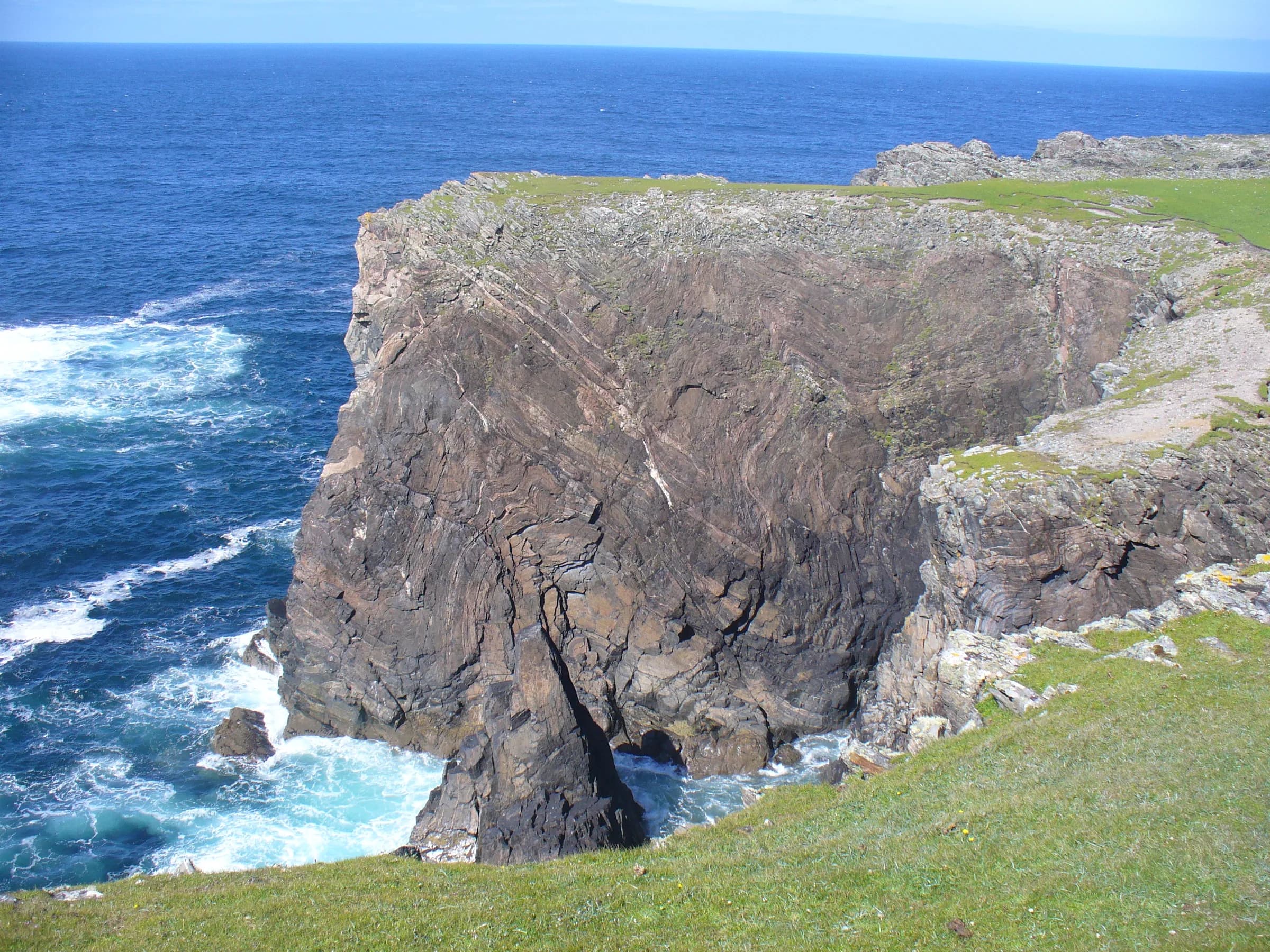
On the afternoon of 26 December 1900, the lighthouse tender Hesperus reached the Flannan Isles, a group of small rocky islands about twenty miles off the west coast of Lewis in the Outer Hebrides of Scotland. The ship was on a routine visit, carrying Joseph Moore, a relief keeper, to take over from the three men who had been manning the lighthouse on Eilean Mòr, the largest of the islands. As the Hesperus approached, her captain fired a rocket and blew the ship's whistle, and no one answered.
Moore was put ashore alone, and he climbed the steep path to the lighthouse in growing alarm. The entrance gate and the main door were both closed, the beds were unmade, and the clock had stopped. He went back down to the landing stage with the news, then returned with the second mate and a seaman to search the station properly. The lighthouse was empty, and the three keepers were gone.
The Mystery
The Flannan Isles lighthouse had been in operation for little more than a year when its keepers disappeared. It stood near the highest point of Eilean Mòr, on a cliff about 150 feet above the sea, and it had been designed by David Alan Stevenson. The light was the only sign of human life on an island that was otherwise uninhabited except for seabirds, and its keepers worked in rotation, with three men on the island and a fourth on shore leave.
The three men on duty in December 1900 were James Ducat, the principal keeper; Thomas Marshall, the second assistant; and Donald McArthur, an occasional keeper who was standing in for William Ross, the first assistant, who was on sick leave. Joseph Moore, the relief keeper who found the station empty, was on shore duty at Breasclete on the Isle of Lewis. All three missing men were experienced lighthouse keepers, and the Board that employed them described them as men who had served it well over the years.
The first sign that something was wrong had come eleven days earlier. Around midnight on 15 December, the steamer Archtor, on a passage from Philadelphia to Leith, noted in her log that the Flannan light was not operating, in poor weather conditions. When the ship docked at Leith on 18 December, the sighting was passed on to the Northern Lighthouse Board, but it was not communicated in time to change anything.
What Is Known
Moore's report of what he found is precise, and it is the foundation of everything that followed. The lamps had been cleaned and refilled, the lens and machinery were clean, the wicks were trimmed and ready for lighting, and the kitchen was tidy. The work of the morning of 15 December had plainly been completed, which suggests the men disappeared in the afternoon of Saturday 15 December.
Two of the three sets of oilskin coats the keepers wore outside in bad weather were missing. The third set, belonging to McArthur, was still hanging in the tower, which suggests that McArthur had been on duty inside the lighthouse while Ducat and Marshall had gone outside. In the small dining area there was food on the table and a chair had been knocked over, as if someone had left in a hurry.
The flagpole had no flag, and none of the usual provision boxes had been left on the landing stage for restocking. The Hesperus herself had been unable to sail from Breasclete as planned on 20 December, because of adverse weather, and did not reach the island until noon on 26 December. By then, whatever had happened to the three men was eleven days old.
The Timeline
The lighthouse was built on Eilean Mòr in the late 1890s and first lit in December 1899. Its keepers settled into the routine of a remote station: tending the lamp, keeping the log, maintaining the buildings, and waiting for the relief ship. The last written entries in the keeper's log were for 13 December, according to the Northern Lighthouse Board and the National Records of Scotland.
On 15 December, the Archtor passed the islands at about midnight and recorded that the light was out. The light had not been seen from the nearest point on Lewis, sixteen miles away, for ten days before the disappearance was discovered. The Hesperus was due to sail on 20 December but was held back by weather, and she reached the Flannans on 26 December.
Captain Harvey, master of the Hesperus, sent a telegram to the mainland that same day. It read, in part: "A dreadful accident has happened at Flannans. The three Keepers, Ducat, Marshall and the occasional have disappeared from the island. On our arrival there this afternoon no sign of life was to be seen on the Island."
He added that the clocks were stopped and other signs indicated the accident must have happened about a week before. Moore and several seamen were left on the island to keep the light burning until other arrangements could be made.
Available Evidence
The investigation that followed found no trace of the men anywhere on the island, but it did find clear evidence of violent weather. Superintendent Robert Muirhead's report, held in the National Records of Scotland, records the damage at the west landing in detail. The iron railing around the crane platform, from the end of the tramway to the concrete steps up from the landing, had been displaced and twisted.
A large block of stone, weighing upwards of twenty hundredweight, had been dislodged from its place. The damage was high above the normal reach of the sea, at a landing where the keepers worked with cranes and tramways to bring stores ashore. The report's description shows that waves had struck the landing with extraordinary force, far beyond what the keepers would have expected in ordinary bad weather.
The state of the lighthouse itself is the other half of the evidence. Everything inside was in order, the lamp was ready for lighting, and the work of the morning had been done. The two missing sets of oilskins show that two men went out, and the set left behind shows that one man stayed in. The half-eaten food and the overturned chair show that the departure was sudden, and the stopped clocks show that the station had been untended for days before the Hesperus arrived.
Investigations and Explanations
The official investigation concluded that the men had been caught by an unexpected large wave and swept into the sea. On this reading, Ducat and Marshall had gone down to the west landing in bad weather, probably to secure gear or to see what damage had been done, and McArthur had either followed them or gone out after them. A single great roller, arriving without warning, could have taken all three at once, and the damage to the crane platform shows that such a wave did strike the landing.
The explanation fits the physical evidence better than any other. It accounts for the storm damage, the missing oilskins, the sudden departure, and the absence of any trace of the men, since bodies taken by the sea off a rocky island would not be expected to return. The Board's history states the conclusion plainly, while adding that the families of the three men, to this day, do not know their fate.
Other explanations have been offered over the years, with varying degrees of credibility. Some have suggested murder, madness, a sea serpent, foreign spies, or supernatural forces, and a film, The Vanishing, released in 2018, dramatised the story for a worldwide audience. None of these accounts has evidence behind it, and all of them depend on ignoring the storm damage that the investigation actually found.
What Remains Unresolved
The most famous clues in the Flannan story are not evidence at all. Over time, a story developed of unusual logbook entries: on 12 December, Marshall was said to have described severe winds such as he had never seen in twenty years, with Ducat quiet and McArthur crying; on 13 December, all three men were said to have been praying; and the final entry, on 15 December, was said to read "Storm ended, sea calm. God is over all."
An investigation by Mike Dash for Fortean Times revealed that these logbook entries were fictional, later additions to the story. The genuine log ends on 13 December, and the entries about fear and prayer do not appear in the record. The puzzle is that experienced keepers, in a secure structure 150 feet above the sea, would have had no reason to fear a storm, and the answer is that they did not write those words. The legend was written later, by other hands, and it has proved harder to correct than the mystery itself.
What is known is that three experienced men left a lighthouse in order, went down to a landing in bad weather, and never came back. What is not known is the exact moment they were taken, whether all three were together when the wave struck, and why they went out when they did. The Northern Lighthouse Board, which employed them, has said only that it can report what was recorded at the time, and that the loss of the three keepers remains a significant and very sad part of its history.