On 26 January 1972, Vesna Vulovic was working as a flight attendant on JAT Flight 367, a McDonnell Douglas DC-9 flying from Stockholm to Belgrade. She was twenty-two years old, and she was not supposed to be on the aircraft at all. The airline had confused her with another flight attendant who shared her first name, and so she boarded the flight in Copenhagen, where the second crew joined the aircraft.
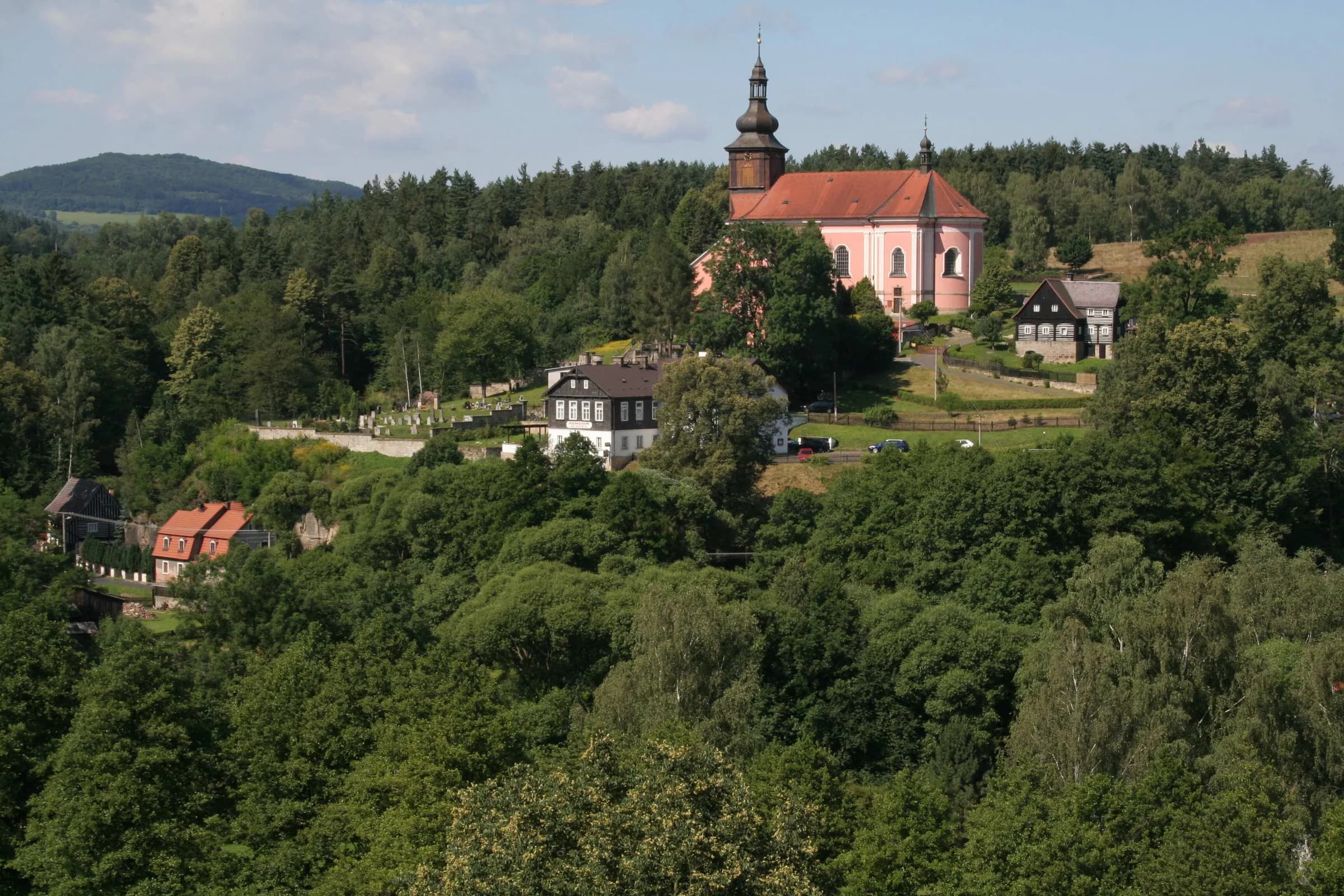
At 4:01 pm, forty-six minutes after takeoff from Copenhagen, an explosion tore through the baggage compartment. The aircraft broke into three pieces over Czechoslovakia, near the village of Srbská Kamenice, and fell from a height of 10,160 metres — 33,333 feet, more than six miles. Twenty-seven of the twenty-eight people aboard were killed. Vulovic was the only survivor.
She has no memory of the explosion, the fall, or the rescue. She was found screaming inside the wreckage by Bruno Honke, a local villager and former Second World War medic, who heard her cries and gave her first aid before rescuers arrived. She was trapped in the tail section of the fuselage, pinned down by a food cart, and her turquoise uniform was covered in blood. Her stiletto heels had been torn off by the force of the impact.
Vulovic was born on 3 January 1950 in Belgrade, in what was then Yugoslavia. Her father was a businessman and her mother a fitness instructor, and she grew up in a household that loved music. She was a fan of the Beatles, and after her first year at university she travelled to Britain to improve her English, staying with her parents' friends in Newbury. She wanted to travel, and she wanted to see the world.
A Flight She Was Not Meant to Take
Vulovic joined Jugoslavenski Aerotransport, the Yugoslav national airline, as a flight attendant, and she was still a trainee when she was assigned to Flight 367. The flight's route ran from Stockholm to Belgrade, with scheduled stopovers in Copenhagen and Zagreb. The second crew, including Vulovic, boarded the aircraft in Copenhagen on the morning of 25 January 1972, and the crew had the afternoon and the following morning to themselves.
She had been excited to travel to Denmark because it was her first time visiting the country. She had wanted to go sightseeing, but her colleagues insisted on going shopping instead. The detail is small, and it is the kind of detail that survives in a story because the person telling it remembers the ordinary day before the extraordinary one. She went shopping, and then she boarded the flight.
The aircraft left Copenhagen Airport at 3:15 pm on 26 January, on the second leg of its journey. The flight recorder stopped at 4:01 pm, when the explosion tore the aircraft apart. The passengers and the other crew were believed to have been sucked out of the aircraft into the freezing air as the cabin depressurised, and they fell to their deaths. Vulovic stayed inside the fuselage, and the fuselage fell with her in it.
The Czechoslovak civil aviation authority later attributed the explosion to a bomb in a briefcase in the baggage compartment. The Yugoslav authorities suspected émigré Croatian nationalists, and a Croatian nationalist group claimed responsibility, but no one was ever arrested. The cause of the explosion was recorded as a bomb, and the question of who placed it was never settled in a court.
The Fall
Vulovic's survival is attributed by the official account to the position she was in when the aircraft broke apart. She was pinned down by a food cart in the tail end of the fuselage, and the tail section separated from the rest of the aircraft and fell as a single piece. It came down in a heavily wooded area, on a snow-covered hillside, and the trees and the snow are thought to have softened the impact.
Her doctors also gave a medical explanation. Vulovic had low blood pressure, and they concluded that she passed out quickly when the cabin depressurised, which kept her heart from bursting on impact. She had known about her low blood pressure before she applied to become a flight attendant, and she had known that it would cause her to fail the medical examination. She drank a large amount of coffee beforehand, she later said, and she was accepted.
The fall itself is a matter of record, and the record is what Guinness World Records has certified. Vulovic fell 10,160 metres without a parachute, the highest fall ever survived. The record has never been broken, and no one has been documented as surviving a fall from a greater height without a parachute.
The figure is not an estimate. It is the altitude at which the aircraft broke apart, as recorded in the official accident report.
In 2009, two journalists challenged the official account, claiming that the aircraft had broken up at a much lower altitude after being forced into a rapid emergency descent, and that it may have been shot down by a Czechoslovak fighter aircraft. Guinness World Records noted the claim and recorded that one of the journalists conceded the evidence was only circumstantial. The body of this article follows the official account and the Guinness record, and the challenge is recorded in the verification notes.
Broken and Put Back Together
Vulovic's injuries were severe. She had a fractured skull, three broken vertebrae, two broken legs, a fractured pelvis, and several broken ribs, and she was temporarily paralysed below the waist. She spent days in a coma — twenty-seven days, according to Guinness World Records — and she spent sixteen months in hospital after the crash. She was in a coma when she was taken to hospital, and the first thing she remembers is seeing her parents there, talking to them and asking why they were with her.
She was able to walk again after ten months, although she walked with a permanent limp because her spine had been twisted in the fall. She made an almost complete recovery, and she asked to be reinstated as a flight attendant. The airline refused, because it did not want the publicity that her return would bring, and it gave her an office job instead. She continued to fly as a passenger, and she said that people often wanted to sit next to her on aircraft.
In 1985, as part of the Guinness World Records Hall of Fame ceremony, Paul McCartney presented Vulovic with a certificate and a medal for the highest fall survived without a parachute. She had grown up listening to the Beatles, and the presentation meant a great deal to her. In her home country, she became a national hero, and she was honoured by the President of Yugoslavia, Josip Broz Tito.
She later described her recovery in the simplest terms. "I was broken, and the doctors put me back together again," she told the New York Times in 2008. "Nobody ever expected me to live this long." She also said that when she saw a newspaper and read what had happened to her, she nearly died from the shock. She had no memory of the crash, and she learned about it from others, as if it had happened to someone else.
The Life After
Vulovic's later life was quieter than the headlines suggested, and it was not always easy. She was dismissed from JAT in the early 1990s after taking part in anti-government protests during the break-up of Yugoslavia, and she continued her work as a pro-democracy activist until the Socialist Party of Serbia was ousted in the Bulldozer Revolution of October 2000. She campaigned for the Democratic Party and for Serbia's entry into the European Union.
She lived alone in her Belgrade apartment in her final years, divorced, on a small pension, with her cats for company. She struggled with survivor's guilt, and she lived a secluded life, giving the occasional interview but otherwise staying out of public view. She never suffered any fear of flying, according to Guinness, and she never experienced psychological trauma from the crash itself, although the guilt of surviving when twenty-seven others died stayed with her.
She died on 23 December 2016, at the age of sixty-six. A neighbour found her dead in her apartment in Belgrade, and the cause of death was not disclosed. She had survived a fall of more than ten kilometres, and she had lived for forty-four years after it, through war, the break-up of her country, and a long quiet old age. The record she holds has never been broken.
Vulovic did not choose the flight, and she did not choose the fall. She was on the aircraft because of a scheduling mistake, and she survived because of where she was sitting and how the fuselage fell. What she chose was what came after: to walk again, to work again, and to live a life that was not defined by a single day in January 1972.
The fall is the reason her name is remembered. The life she lived afterwards is the reason it is worth remembering.