On 20 October 1943, Irena Sendler threw a small package out of a window to a friend waiting below. The friend hid it under her arm and carried it away. Inside was a list of the real names of thousands of Jewish children smuggled out of the Warsaw Ghetto. Hours later, the Gestapo arrested Sendler and took her to Pawiak prison.
She was thirty-three, a social worker for the city of Warsaw, and the head of the children's section of Żegota, the underground Council for Aid to Jews. In Pawiak she was beaten and tortured, her feet and legs broken, and sentenced to death. She gave the Gestapo no names.
Sendler was born on 15 February 1910 in Warsaw, and she spent her childhood in Otwock, a town with a large Jewish community. Her father, Stanisław Krzyżanowski, was a doctor who ran a sanatorium there and treated poor patients, many of them Jewish. He died when Irena was seven, and his example stayed with her.
She studied at the University of Warsaw from 1928. In those years, Jewish and non-Jewish students were forbidden to sit together, and Sendler refused to obey the rule. She was suspended for a year for her defiance. She finished her studies and became a social worker, employed by the Welfare Department of the Warsaw municipality.
The Ghetto Is Sealed
Germany invaded Poland in September 1939, and Warsaw was occupied within weeks. Sendler was twenty-nine, and she was already working for the city's social welfare department. She joined the Polish underground and began using her position to help Jews, at a time when helping a Jew in occupied Poland could mean death for the helper and for everyone in the helper's household.
In October 1940, the German authorities ordered the creation of a ghetto in Warsaw, and in November they sealed it off. More than 400,000 Jews were crowded into about 1.3 square miles of the city. Food rations were set far below what people needed, and around 83,000 people died of hunger and disease between 1940 and mid-1942. Between July and September 1942, about 265,000 Jews were deported from the ghetto to the Treblinka killing centre.
Sendler's job gave her a way in. She obtained a permit from the municipality that allowed her to enter the ghetto to inspect sanitary conditions, officially to check for typhus, which the Germans feared would spread beyond the walls. Whenever she passed through the checkpoints, she wore a Star of David on her clothing, as Jews were required to do, so that she would draw less attention and show solidarity with the ghetto's residents.
Inside, she made contact with activists of the Jewish welfare organisation and began to help. She also carried forged papers that listed her occupation as nurse, which gave her greater access when a typhoid outbreak made the Germans reluctant to enter the ghetto themselves. Her real work was to find families with young children and persuade the parents to let her take the children out.
Żegota and the Children's Section
In the autumn of 1942, after the great deportation, the Polish underground formed Żegota, the Council for Aid to Jews. It was funded in part by the Polish government in exile, and Poles and Jews worked in it together. Sendler was among the first to join, and her work became the smuggling of children out of the ghetto and the finding of hiding places for them.
In September 1943, four months after the ghetto was destroyed in the uprising of April and May, Sendler was appointed director of Żegota's Department for the Care of Jewish Children. Her underground name was Jolanta. She used her contacts with orphanages, convents, schools, hospitals, and Polish families to place the children she brought out, and she organised a network of colleagues to carry the work forward.
The methods of escape were varied and dangerous. Babies and small children were carried out in ambulances, sometimes sedated so they would not cry. Others left hidden in sacks, in a carpenter's toolbox, in body bags, in coffins, or through the courthouse on the edge of the ghetto. Some children were taken in one door of a church inside the ghetto and came out of another door on the free side, with new Christian identities.
One of the youngest was Elżbieta Ficowska, five months old, who was carried out in a small wooden carpenter's box and placed with a Polish family on the Aryan side of the wall. Each child who left received false identity papers and a new Polish name. The network that did this work numbered about thirty volunteers, coordinated by Sendler from her position in the welfare department.
The Lists in the Jars
Sendler knew that rescue was only half of the task. If the children were to recover their real names and their families after the war, someone had to remember who they were. She kept coded lists of each child's original name, family, and new placement, written so that only she could understand them if they were found. She hid the lists in jars buried under an apple tree in a neighbour's garden.
The lists were the reason the package thrown from the window mattered so much. Sendler had been betrayed, and she knew the Gestapo would search her home. She got the lists out first, and a colleague reburied them. The jars held the names of about 2,500 children, according to the figure most often cited, though Yad Vashem states plainly that the exact number saved by Sendler and her colleagues is unknown.
After the war, Sendler dug up the jars and handed the records to Adolf Berman and his staff at the Central Committee of Polish Jews, so that surviving relatives could be traced. Many of the children had lost their parents, and many never learned their original names. The lists were an attempt to give back what the war had taken, even when it could not be fully given back.
Sendler herself later explained her motives in the simplest terms, in words recorded in her statement to Yad Vashem. She had been taught by her father, she said, that when someone is drowning you do not ask whether they can swim; you jump in and help.
Arrest, Torture, and Release
In Pawiak prison, the Gestapo beat Sendler and broke her feet and legs, trying to force her to reveal the names of the children and her colleagues. She revealed nothing. She was sentenced to death for her work, and a date was set for her execution. On that day, Żegota bribed a German guard, and she was taken out of the prison and listed among the executed.
She was released in February 1944 and went into hiding under a new identity, continuing her work for Żegota. During the Warsaw Uprising of August 1944 she cared for the wounded in a field hospital.
The years after the war were not kind to her. The communist government of Poland persecuted members of the wartime resistance, and Żegota's people were harassed, interrogated, and in some cases imprisoned. Sendler kept silent about her wartime work for decades, and almost no one outside a small circle knew what she had done.
Recognition came slowly. In 1946 she received the Gold Cross of Merit for saving Jews during the occupation. On 19 October 1965, Yad Vashem recognised her as Righteous Among the Nations, and in 1983 she travelled to Israel and planted an olive tree in the Garden of the Righteous. In 2003 she received the Order of the White Eagle, Poland's highest civilian decoration, and in 2007 the Polish government put her forward as a candidate for the Nobel Peace Prize.
Found Again, Sixty Years Later
Sendler would probably have remained little known outside Poland if three schoolgirls in Uniontown, Kansas, had not found a brief reference to her in 1999 while preparing a National History Day project. They read in a magazine that she had saved 2,500 children from the Warsaw Ghetto, assumed the number must be a misprint, and began to investigate. Their play about her life, "Life in a Jar", took the story around the world.
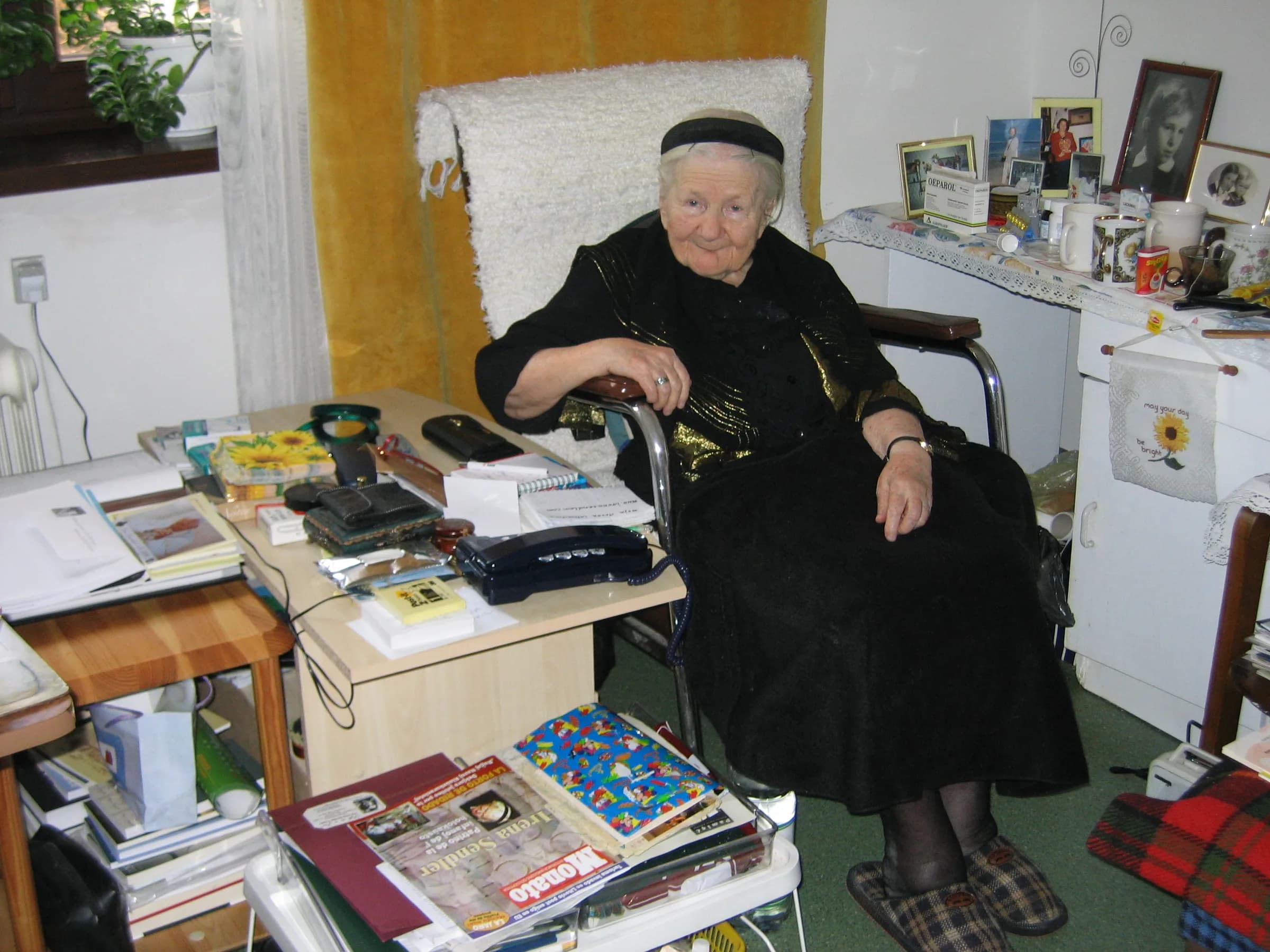
The girls discovered that Sendler was still alive. She was eighty-nine, living in Warsaw, and she met them when they travelled to Poland. She told them what she had done, and she told them that she did not consider it heroic. The play's title referred to the jars under the apple tree.
Sendler died in Warsaw on 12 May 2008, at the age of ninety-eight, and she is buried in Powązki Cemetery. She had spent the last years of her life receiving honours she had not sought, for work she had done in silence for most of her life. The jars are gone, the lists handed over, and the children she saved are now old people with grandchildren of their own.
What remains is a record of what one social worker did with a permit, a network, and a set of lists. She did not stop a war, and she did not save everyone she tried to save. She got children out of a sealed ghetto, gave them new names, and wrote down their old ones so they would not be lost. That is what she did.