On 24 December 1971, Juliane Koepcke was flying home for Christmas with her mother. She was seventeen years old, and she had graduated from her school in Lima the day before. The flight was LANSA Flight 508, from Lima to Pucallpa in Peru, and the aircraft was a Lockheed Electra with ninety-two people aboard. About forty minutes into the flight, the aircraft flew into a violent thunderstorm, and then it broke apart in the air.
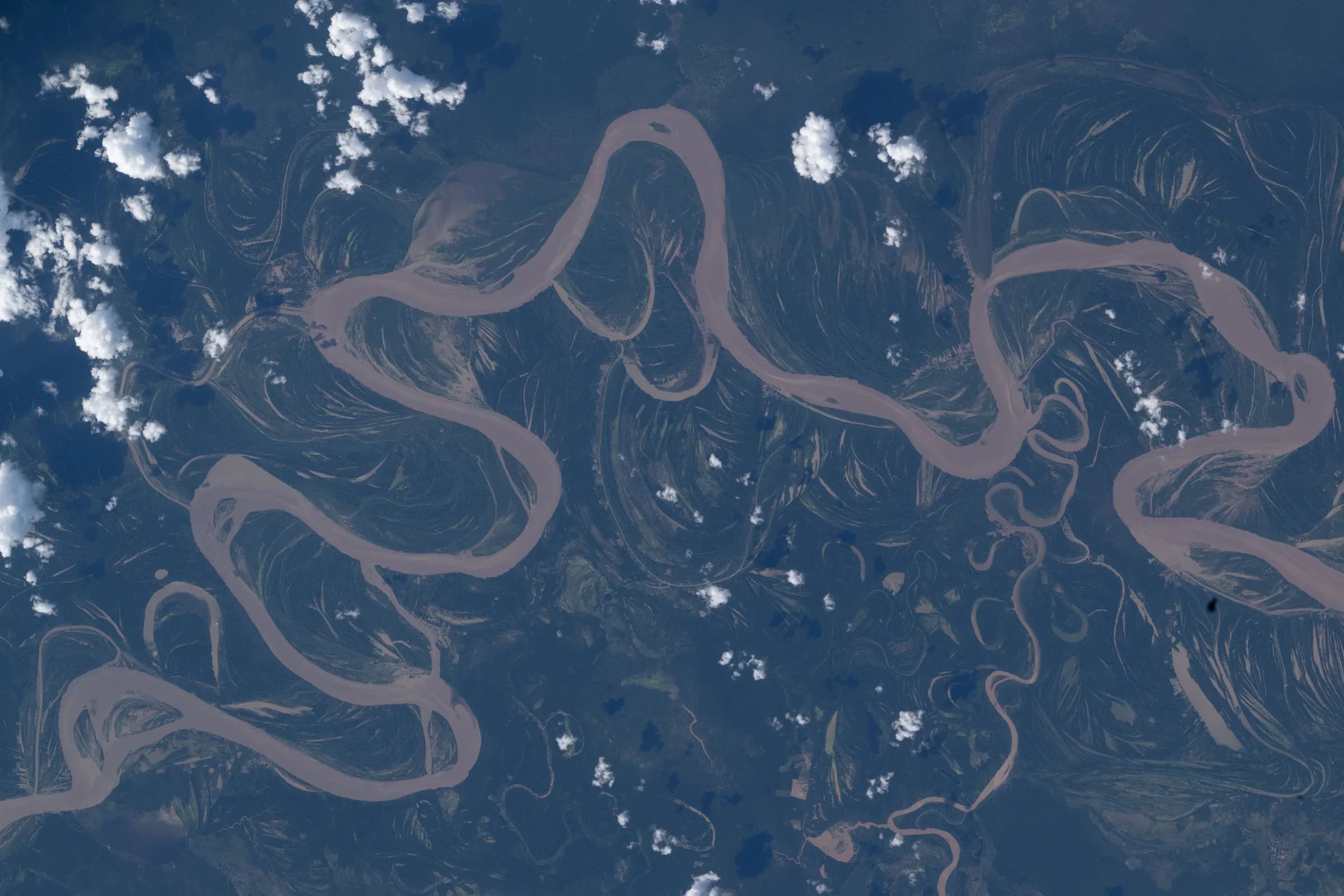
Koepcke fell about 3,000 metres — nearly two miles — still strapped to her row of seats. She lost consciousness before she reached the ground, and she remembers nothing of the impact. She woke the next morning on the forest floor of the Amazon rainforest, alone, injured, and wearing a thin dress. She had lost her glasses and one of her shoes.
Ninety-one of the ninety-two people aboard the aircraft died. Koepcke was the only survivor. She had a broken collarbone, a deep cut on her right arm, an eye swollen shut, a torn ligament in her knee, and concussion.
Her mother, who had been sitting beside her, was among the dead. Koepcke would spend the next eleven days finding her way out of the forest.
She was born on 10 October 1954 in Lima, the only child of German zoologists Hans-Wilhelm and Maria Koepcke. Her father was a biologist and her mother an ornithologist, and both worked at the Museum of Natural History in Lima. When Juliane was fourteen, her parents founded Panguana, a biological research station deep in the Amazon rainforest, and the family lived there.
A Childhood in the Forest
Growing up at Panguana gave Koepcke something no other passenger on Flight 508 possessed. She had spent a year and a half living at the research station, and she had learned how the forest worked. She knew the sounds of the frogs and birds, she knew which water to follow, and she knew that the forest was not the unbroken danger that outsiders imagined it to be.
She later told the BBC that she had learned a great deal about life in the rainforest, and that it was not too dangerous. "It's not the green hell that the world always thinks," she said.
The remark matters because it explains what happened next. She was not a stranger in the forest. She was in country she recognised, even though she was hurt, alone, and without food.
Her parents had wanted to fly home earlier in December, but Koepcke asked to stay in Lima for her graduation ceremony on 23 December. Her father had urged her mother to avoid flying with LANSA, an airline with a poor safety record. LANSA had lost an aircraft the year before, when Flight 502 crashed on takeoff from Cusco in August 1970, killing 99 people. The family flew with LANSA anyway, because no other seats were available.
Flight 508 left Lima around midday, bound for Pucallpa with a continuation to Iquitos. Koepcke had the window seat, and her mother sat beside her. The aircraft climbed to about 21,000 feet and entered an area of intense thunderstorms and turbulence.
About forty minutes into the flight, the aircraft was struck by lightning, and the storm and the attempt to level the aircraft overloaded the structure. The right wing sheared away, then part of the left, and the Electra broke apart in mid-air.
The Fall
Koepcke's own account of the break-up is the clearest record of it. She wrote for the BBC in 2012 that she saw a very bright light on the outer engine on the left. Her mother said very calmly: "That is the end, it's all over." Those were the last words Koepcke ever heard from her. The aircraft went into a nose-dive, the cabin went dark, and the passengers were screaming.
Then the noise stopped, and Koepcke was outside the aircraft, in freefall, strapped to her seat bench and hanging head over heels. "The whispering of the wind was the only noise I could hear," she wrote. "I felt completely alone." She could see the canopy of the jungle spinning towards her, and then she lost consciousness. She remembers nothing of the impact itself.
She was still buckled into a row of three seats when she fell, and experts have suggested that the row acted as a kind of parachute, slowing her fall and spreading the force of the landing. The thick foliage at her landing site and the updraft from the thunderstorm may also have helped. None of this is certain. What is certain is that she came to rest alive, and that as many as fourteen other passengers were later found to have survived the initial crash, only to die while waiting to be rescued.
She woke the following morning on the forest floor, in pain and disoriented, with the rainforest roaring around her. She had been unconscious for hours, and the aircraft's wreckage was scattered across miles of jungle. No search aircraft could see through the canopy, and no one knew where she was. She had to decide for herself what to do next.
Eleven Days
Koepcke's first decision was to follow water. Her parents had taught her that a creek leads to a river, a river leads to people, and people mean help. She found a small stream and followed it downstream, walking and wading for days through the forest. She had almost no food, and she drank from the streams she followed.
Her injuries made the journey slow and painful. Her broken collarbone limited what she could do with one arm, and the deep cut on her arm became infested with botfly larvae. She was hungry, exhausted, and losing strength, and she was also nearly blind without her glasses. She kept going because she knew the forest, and because she knew that staying where she was would not save her.
She later said that the thought of being the only survivor haunted her, and that it would haunt her for the rest of her life. She had nightmares about the crash for years, and the grief for her mother returned again and again. She did not describe the eleven days as a triumph. She described them as the days she had to get through in order to reach people.
After nine days, she found an encampment that had been set up by local lumberjacks. The camp was empty when she arrived, and she rested there and waited. A few hours later, the lumberjacks returned and found her.
They poured gasoline onto the wound in her arm to kill the larvae, and they took her by canoe for eleven hours to a more inhabited area. From there, she was airlifted to a hospital.
Coming Home
Koepcke's mother was not found until 12 January 1972, nearly three weeks after the crash. Her body was recovered from the jungle, and the fact of her death, which Koepcke had already understood, became certain. Koepcke was the only person to emerge alive from the disaster, and her survival made headlines around the world.
She did not retreat from the forest that had nearly killed her. She studied biology, as her parents had, and she earned a doctorate. She became a mammalogist specialising in bats, and in 2000 she took over the directorship of Panguana, the research station her parents had founded and where she had grown up. The station is now a protected nature reserve, and she has run it for more than two decades.
In 1998, the filmmaker Werner Herzog made a documentary with her, "Wings of Hope", in which she returned to the crash site and retraced her journey through the jungle. In 2011, she published her memoir, "When I Fell from the Sky", telling the story in her own words. She has given interviews about the crash for decades, and her account has remained consistent.
Koepcke has said that the question of why she survived has no simple answer. The seat row, the trees, the storm, and her knowledge of the forest may all have played a part, and no one can separate them now. What can be said is that a seventeen-year-old girl fell two miles from the sky, woke up alone in the jungle, and walked out of it. She then spent her life studying the forest that saved her, and running the station where she had learned to understand it.