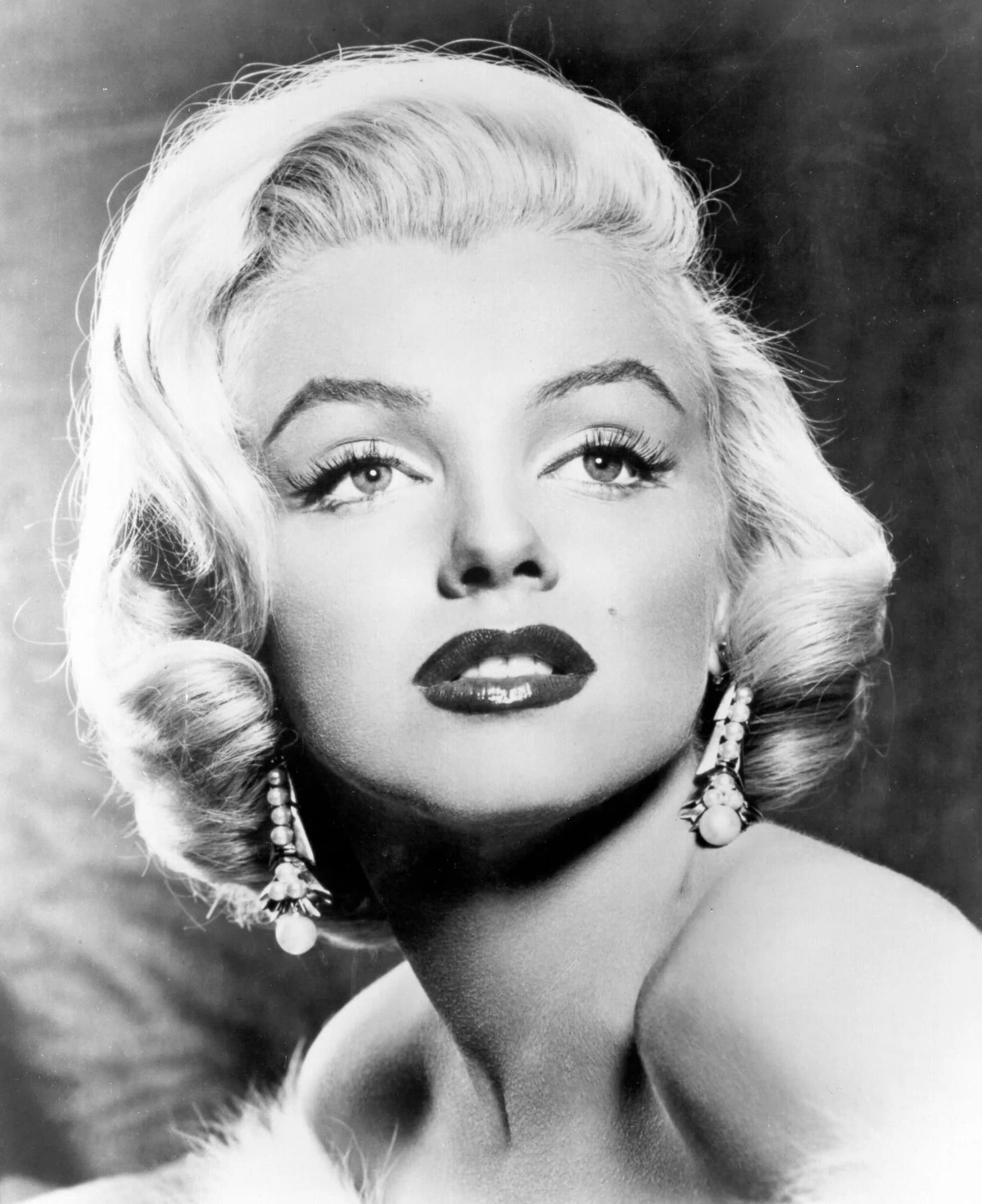
In 1953, Marilyn Monroe appeared in three films in a single year: the thriller Niagara and the comedies Gentlemen Prefer Blondes and How to Marry a Millionaire. Audiences recognised her at once, and studios knew what they had. She was blonde, breathy, and funny, and her name on a poster sold tickets.
That same year, the image began to harden into a limit. The roles that made her famous also told producers what she was for, and Monroe spent the rest of her short career trying to widen that definition. She wanted dramatic parts, control over her work, and pay that matched her drawing power.
The tension between the image and the person behind it is the real story of her fame. It explains why a woman at the top of Hollywood could still feel that the industry saw only part of her.
The Public Image
By the mid-1950s, Monroe's image was fixed in the public mind. Her blonde hair, light voice, and comic timing were instantly recognisable, and her performance of "Diamonds Are a Girl's Best Friend" in Gentlemen Prefer Blondes became one of the most imitated musical numbers in film history. The famous scene in The Seven Year Itch (1955), in which her white dress rises above a subway grate, became one of the most reproduced images in American popular culture.
That image sold films. Her films grossed $200 million by the time of her death in 1962, a large sum for a career that lasted only about a decade in leading roles. In 1999, the American Film Institute ranked her sixth among the greatest female screen legends, a measure of how durable the image remained decades later.
The image also carried a label she disliked: the "dumb blonde". Monroe played comic characters who were often underestimated, and many viewers assumed the actress was the character. That confusion followed her through her career, and it shaped the parts she was offered.
Origins and Background
Monroe was born Norma Jeane Mortenson on 1 June 1926 in Los Angeles, California. Her mother, Gladys Baker, worked as a film cutter, but mental illness made it difficult for her to care for her daughter. Norma Jeane spent much of her childhood in foster homes, and in September 1935 she was placed in the Los Angeles Orphans Home.
She lived for a time with her mother's friend Grace Goddard and with other guardians, moving between households as circumstances changed. The instability of those years is well documented, and it left her without the settled family life that most children take for granted. She later described acting as something she had wanted from childhood, a wish formed while she was still moving between homes.
At sixteen, she married her neighbour James Dougherty on 19 June 1942, in part to avoid returning to the orphanage. Dougherty joined the Merchant Marines during the Second World War, and Norma Jeane began working at the Radioplane Company, where a photographer noticed her. She began modelling, and the marriage ended in divorce in 1946.
The Path to Fame
In 1946, Monroe signed a contract with Twentieth Century-Fox and adopted the professional name Marilyn Monroe. She took "Marilyn" from the actress Marilyn Miller and "Monroe" from her mother's family name. Her early film work consisted of small parts, and she moved between Fox and Columbia Pictures before returning to Fox.
Her breakthrough came in small but noticed performances in The Asphalt Jungle and All About Eve, both released in 1950. Those roles led to larger parts, and by 1953 she was a leading actress. Niagara showed that she could carry a dramatic thriller, while the two comedies of that year established her as a box-office star.
Success brought a seven-year Fox contract and a new problem: the studio controlled the roles she played. Monroe was paid far less than male stars of comparable popularity, and she was repeatedly cast in variations of the same comic character. Her fame grew quickly, but her bargaining power grew more slowly.
The Reality Behind the Image
Behind the glamour, Monroe worked hard to be taken seriously. In 1955 she founded her own production company, Marilyn Monroe Productions, giving her a measure of independence from the studio system. The company produced The Prince and the Showgirl in 1957, in which she starred opposite Laurence Olivier.
She also studied acting in New York, working with Lee Strasberg and the Actors Studio, whose records document her place in that circle. Her performance in Bus Stop (1956) drew praise for its dramatic range, and Some Like It Hot (1959) earned her a Golden Globe for Best Actress in a Comedy or Musical. The film is now widely regarded as one of the greatest comedies ever made.
Three of the films in which she appeared — Some Like It Hot, All About Eve, and The Asphalt Jungle — have been added to the Library of Congress National Film Registry. That recognition rests on the films themselves, not on the publicity around her, and it supports the case she was making during her lifetime: that her work deserved serious attention.
Challenges, Decisions and Consequences
Monroe's personal life was public in a way that few stars of her time experienced. Her marriage to baseball player Joe DiMaggio lasted from January 1954 to 1955, and her marriage to playwright Arthur Miller lasted from 1956 to 1961. Both marriages were followed closely by the press, and both ended in divorce.
Her final film was The Misfits (1961), written by Miller, in which she starred with Clark Gable and Montgomery Clift. The production was difficult, and Monroe's health was poor. In June 1962 she was dismissed from the film Something's Got to Give after repeated absences, although she was later rehired and work never resumed.
She died on 4 August 1962 in Los Angeles, at the age of 36, from a barbiturate overdose. Britannica records that her death was ruled a "probable suicide". The precise circumstances have been debated ever since, and this article does not present any unverified theory about them as fact.
Present and Legacy
More than sixty years after her death, Monroe remains one of the most recognisable figures in film history. Her image appears on posters, clothing, and advertisements around the world, often detached from the films in which it was created. That continued visibility is itself part of her legacy, and it raises the question she faced in life: whether the image can ever be separated from the work.
The films offer an answer. Some Like It Hot still plays to audiences who were not alive when it was made, and The Asphalt Jungle and All About Eve are preserved by the Library of Congress for their cultural and historical significance. Those films show an actress with comic timing, dramatic range, and a clear understanding of the camera.
Monroe's career also left a practical lesson for the film industry. Her production company was an early attempt by a female star to control her own work, and her disputes with Fox over pay and roles were part of a wider shift in Hollywood, away from the old studio system and toward greater independence for performers. She did not live to see that shift completed, but she helped to push it forward.