On 14 July 1960, a twenty-six-year-old Englishwoman arrived on the shore of Lake Tanganyika, in what is now Tanzania, with her mother, a pair of binoculars, and a notebook. Her name was Jane Goodall. She had come to watch chimpanzees in the forest at Gombe, and she had almost no qualifications for the job.
She had left school at eighteen, she had no university degree, and she had never carried out field research. What she had was patience, and a willingness to sit in a forest for months until the animals stopped running away.
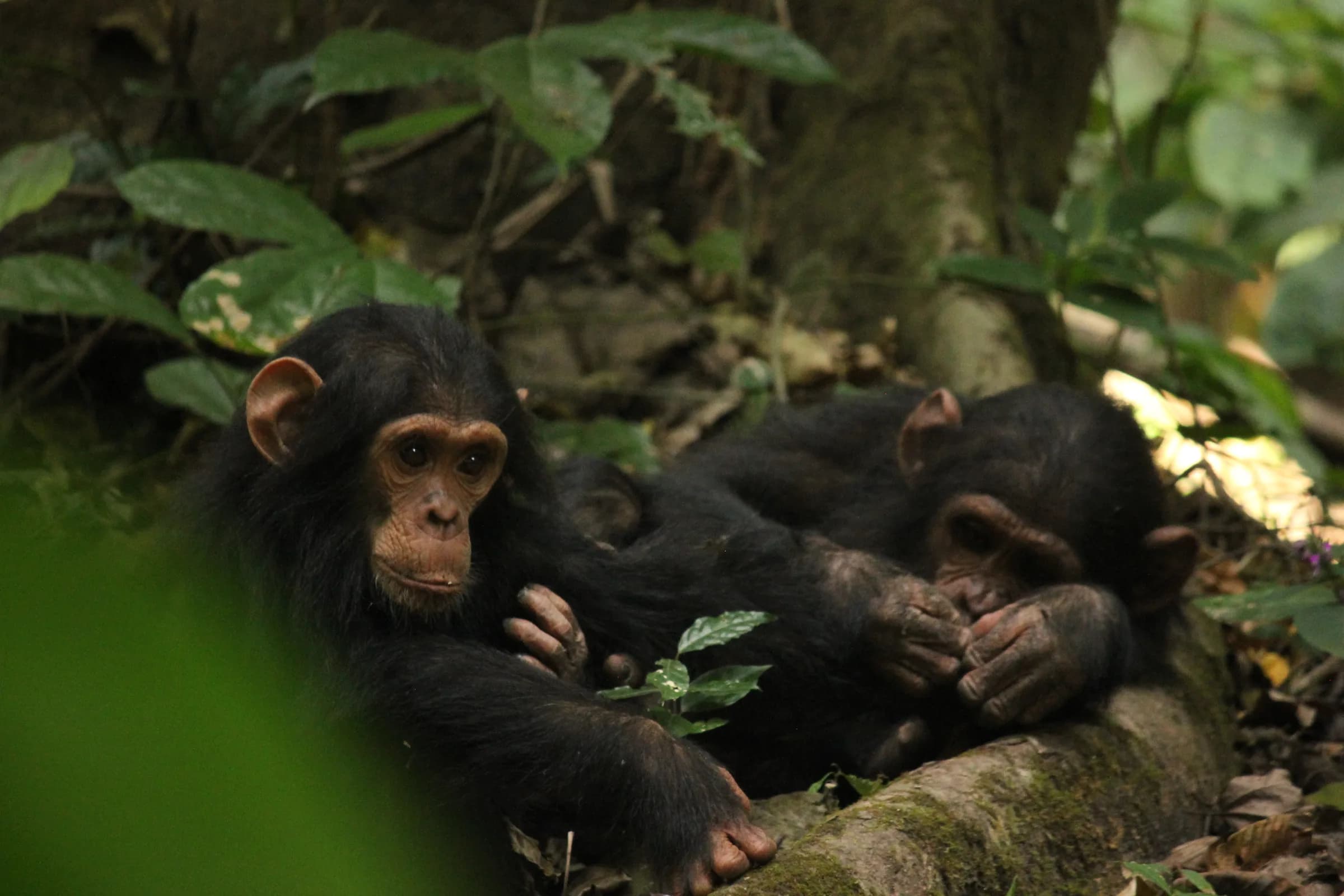
Within a few months, she saw something that changed science. A chimpanzee she had named David Greybeard stripped the leaves from a twig and used it to fish termites from a mound. Chimpanzees, it turned out, made and used tools.
Until then, toolmaking had been treated as the definition of being human. Goodall's observation forced science to reconsider what that definition meant.
A Childhood of Animals
Valerie Jane Morris-Goodall was born on 3 April 1934 in London. Her father, Mortimer, was a businessman, and her mother, Vanne, was a novelist who wrote under the pen name Vanne Morris-Goodall. Jane was a quiet girl and a bookworm.
She read Doctor Dolittle and the Tarzan novels, and she kept a lifelike toy chimpanzee named Jubilee, given to her by her father, which she carried with her everywhere. Her interest in animals was not a passing childhood phase. It was the direction of her life.
Her parents divorced when she was twelve. Her mother, raising two daughters alone, could not afford to send Jane to university, and suggested secretarial school instead. Jane left school at eighteen and worked as a secretary and as a film production assistant, saving money and waiting for a way to Africa.
In 1957, a school friend invited her to a family farm in Kenya. She accepted at once. The farm was her way in, and once she was in Kenya she met the palaeontologist and anthropologist Louis Leakey, who was looking for someone to study chimpanzees in the wild.
Leakey had a theory. He believed that studying our closest living relatives would shed light on the behaviour of early humans, and he wanted a researcher who would watch chimpanzees patiently, without preconceptions, for a long time. Goodall had no degree, and that, for Leakey, was part of the point.
In 1958 he sent her to London to study primate behaviour with Osman Hill and primate anatomy with John Napier. Then he raised the funds for the fieldwork. On 14 July 1960, Goodall arrived at the Gombe Stream Chimpanzee Reserve, accompanied by her mother, whose presence was required by the chief warden.
The First Months at Gombe
The first three months were slow. Goodall watched the chimpanzees through binoculars from a distance, letting them grow used to her. The animals fled when she approached, and she spent her days on a peak above the forest, waiting.
She gave the chimpanzees names instead of numbers: David Greybeard, Goliath, Flo, Fifi, and Passion. Naming them was unconventional, and it reflected her method. She treated them as individuals with personalities, emotions, and lasting family relationships, not as specimens.
In the autumn of 1960, the patience paid off. Through her binoculars, she watched David Greybeard pluck a long blade of grass, push it into a termite mound, and pull it out covered with termites. Soon after, she watched another chimpanzee strip the leaves from a branch and use it in the same way.
The chimpanzees were not only using tools; they were modifying them to suit the task. Goodall also observed chimpanzees hunting and eating meat, including bushpigs and red colobus monkeys, which disproved the accepted view that chimpanzees were vegetarians. Both discoveries challenged ideas that had stood for generations.
The findings reached Leakey quickly, and they reached the wider world through National Geographic, which published its first cover story about Goodall and her research in 1963. In 1962, the Dutch wildlife photographer Hugo van Lawick filmed Miss Goodall and the Wild Chimpanzees. Goodall married van Lawick in 1964, and in 1967 she gave birth to their son, Hugo Eric Louis, known as Grub.
In 1961 she had entered Cambridge University as a doctoral candidate, one of the few people ever admitted without an undergraduate degree, and Cambridge awarded her a doctorate in ethology in 1965. Her thesis, on the behaviour of free-living chimpanzees, drew on her first five years at Gombe.
What the Forest Showed Her
Over the following decades, Goodall documented a world that no one had seen in such detail. She recorded chimpanzees hugging, kissing, patting each other on the back, and tickling one another. She recorded mothers caring for infants for years, and the long bonds between siblings.
She recorded grief when a chimpanzee died, and the distress of an infant separated from its mother. Her books made the chimpanzees of Gombe known by name to readers around the world: In the Shadow of Man, published in 1971, was translated into forty-eight languages, and The Chimpanzees of Gombe, published in 1986, summarised twenty-five years of observation.
Not all of what she found was gentle. Between 1974 and 1978, two groups of chimpanzees at Gombe fought what became known as the four-year war, in which the larger Kasakela group attacked and killed members of the splinter Kahama group. In 1975, cannibalism was observed among the chimpanzees.
Some scientists received these findings harshly, because they showed that violence and aggression were part of chimpanzee life as well as affection. Goodall reported what she saw, and she did not soften it. Her account of chimpanzees included both the tenderness and the violence, because both were in the record.
In 1965 she established the Gombe Stream Research Centre, which became a training ground for students of primates, and attracted many women to a field in which women had been nearly absent when she began. The research she started in 1960 has continued without interruption, and the Jane Goodall Institute describes it as the longest-running wild chimpanzee study in the world, now more than sixty-five years old.
From Researcher to Advocate
In 1986, after publishing The Chimpanzees of Gombe, Goodall concluded her life in the field and became an activist. She had seen the forest around Gombe shrinking, and she had seen chimpanzee numbers falling across Africa. In 1977 she had founded the Jane Goodall Institute, at first to support the research at Gombe, and it grew into a global conservation organisation with offices in many countries.
In 1991, she founded Roots & Shoots with twelve high-school students in Dar es Salaam, a programme that now works with young people in dozens of countries. She also established sanctuaries for orphaned chimpanzees, including Tchimpounga in the Republic of the Congo, founded in 1992.
She was appointed a United Nations Messenger of Peace in 2002, and she was made a Dame Commander of the Order of the British Empire in 2004. She received the Presidential Medal of Freedom in the United States, the Kyoto Prize in Japan, and the Légion d'honneur in France. Until her death she travelled for about three hundred days a year, speaking to audiences around the world. Her final book, The Book of Hope, was translated into more than twenty languages.
Jane Goodall died on 1 October 2025 in Los Angeles, California, at the age of ninety-one. She was survived by her son and three grandchildren. The institute she founded continues the research at Gombe, the community conservation programme known as Tacare, the sanctuaries, and Roots & Shoots. The study that began with a young woman, a pair of binoculars, and a notebook in 1960 is still running, and it is still teaching the world what chimpanzees are.
Goodall's discovery was a fact about chimpanzees, but its meaning was about humans. If chimpanzees make tools, eat meat, form families, grieve, and fight wars, then the line between humans and other animals is not where it was drawn. She did not argue the point in the abstract. She watched, for decades, and she wrote down what she saw.