The Break-In
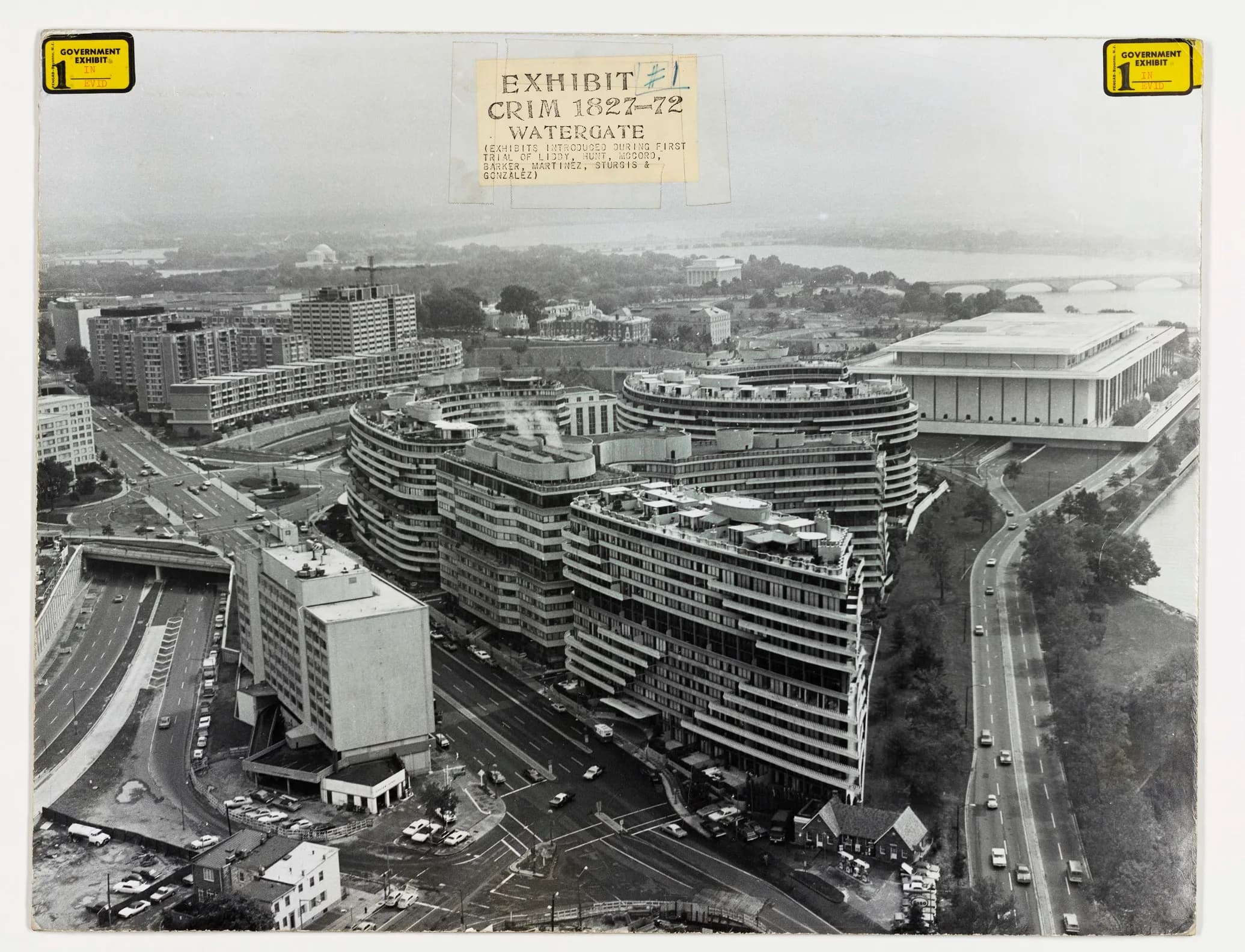
In the early hours of 17 June 1972, five men were arrested inside the headquarters of the Democratic National Committee at the Watergate office complex in Washington, D.C. They were caught burglarising the offices and planting listening devices, and they were carrying cameras, lock picks, and thousands of dollars in cash. The police report that night described an ordinary burglary. It was the beginning of the greatest political scandal in American history.
The five men were not ordinary burglars. They had been hired by the Committee to Re-elect the President, the fundraising arm of President Richard Nixon's re-election campaign, and four of the five had been recruited by E. Howard Hunt, a former CIA operative. The operation, codenamed Gemstone, was run by Hunt and another former intelligence officer, G. Gordon Liddy.
It was not even the first break-in. The same team had entered the Democratic headquarters on 28 May 1972 and bugged the telephones of staff members. They returned on 17 June to fix a faulty listening device, and a security guard noticed tape on a door lock and called the police.
At first the scandal seemed small. The White House denied any involvement, and Nixon went on to win re-election in November 1972 by one of the largest margins in American history. The cover-up that followed, however, would take two years to unravel, and it would end with Nixon's resignation.
The break-in itself was a crime. The cover-up was what destroyed a presidency.
Why the Break-In Happened
The break-in grew out of the Nixon White House's determination to stop leaks. The administration had created a secret unit, known as the Plumbers, to investigate leaks of classified information, and the same men were later assigned to the re-election campaign. By early 1972 the Plumbers were frustrated at the lack of assignments, and Liddy and Hunt pressed the White House to give them new operations. The chain of requests that followed led, a few months later, to the Watergate break-ins.
The political context was a presidency that expected to win but feared losing. Nixon had been elected in 1968 and re-elected in 1972 against Senator George McGovern, winning 520 electoral votes to 17 and 46.7 million popular votes to 28.9 million. The money that paid the burglars was traced to the Committee to Re-elect the President, and that link was the thread investigators followed.
No consensus exists on the motive for the break-in, or on who specifically ordered it. Theories range from a bungled operation by campaign officials acting on their own to a deliberate attempt to gather information on the Democrats. What the record does establish is that the break-in was part of a wider programme of political espionage, illegally funded, and that the White House moved quickly to conceal it. The concealment, not the burglary alone, is what the scandal became.
The concealment began within days of the arrests. Nixon secretly directed the White House counsel, John Dean, to oversee a cover-up to hide the administration's involvement. He obstructed the FBI's inquiry and authorised secret cash payments to the burglars to keep them from implicating the administration.
The People Who Brought It Down
Two reporters at The Washington Post, Bob Woodward and Carl Bernstein, refused to let the story go. Their reporting, based largely on information from an unnamed source called "Deep Throat", linked the burglars to the White House and exposed the political espionage programme. The identity of Deep Throat became a story in its own right and a subject of speculation for decades, until W. Mark Felt, a senior FBI official at the time of the investigation, revealed himself as the informant in 2005.
Inside the White House, the cover-up depended on a small group of loyal aides. John Dean, the White House counsel, managed the concealment until he began cooperating with investigators in 1973. H. R. Haldeman, the chief of staff, and John Ehrlichman, the domestic affairs adviser, were among the president's closest aides, and both were later indicted. In total, 69 people were charged with Watergate crimes, and most pleaded guilty or were convicted.
The Senate investigation gave the scandal its public stage. A Senate select committee held hearings through 1973, and in July of that year a former White House aide, Alexander Butterfield, revealed that Nixon had installed a secret taping system in the White House. The system had recorded conversations in the Oval Office and other rooms since February 1971, and the tapes could show what the president knew and when he knew it. The hearings, broadcast on television, turned Watergate from a newspaper story into a national event.
The special prosecutors carried the legal case. Archibald Cox, appointed by Attorney General Elliot Richardson, subpoenaed the tapes, and Nixon refused to release them, claiming executive privilege. When Cox refused to drop his demand, Nixon ordered him fired.
Richardson resigned rather than carry out the order, and his deputy, William Ruckelshaus, resigned as well. The Solicitor General, Robert Bork, carried out the firing. The episode became known as the Saturday Night Massacre, and it destroyed what remained of public trust in Nixon's account.
A White House Built on Secrecy
The taping system was the hidden centre of the scandal. It had been installed by the Secret Service in February 1971, on Nixon's instructions, and it recorded about 3,700 hours of conversation on 950 tapes before it was switched off in July 1973. Instead, the tapes became the evidence that ended his presidency, because they recorded the cover-up in his own voice.
The White House's secrecy had a history. Nixon's administration had fought leaks with wiretaps, investigations, and a secret unit that operated outside normal channels. The Plumbers, the group that carried out the break-in, had been created for that purpose.
The scandal showed what happened when a government treated its political opponents as enemies and its own rules as optional. The break-in was not an isolated act. It was the product of a way of governing.
The Tapes and the Resignation
After the Saturday Night Massacre, Nixon appointed a new special prosecutor, the Texas lawyer Leon Jaworski, and promised not to fire him without congressional consent. Jaworski renewed the pursuit of the tapes, and in April 1974 he obtained a subpoena for recordings of 64 conversations. Nixon released edited transcripts instead, and one of the tapes he did release contained a gap of eighteen and a half minutes.
The Supreme Court decided the question on 24 July 1974. In United States v. Nixon, the Court ruled unanimously, 8 to 0, that Nixon had to release the tapes, and that a general claim of executive privilege could not override the need for evidence in a criminal trial. A week later the House Judiciary Committee recommended impeachment for obstructing justice, abuse of power, and contempt of Congress.
The tapes Nixon was forced to release included the conversation that ended his presidency. Released on 5 August 1974, the "smoking gun" tape recorded Nixon and Haldeman on 23 June 1972, six days after the break-in, agreeing to order the CIA to stop the FBI's investigation. The tape showed that Nixon had known about the cover-up from the start and had directed it.
Facing almost certain impeachment and removal, Nixon resigned on 9 August 1974, the only American president ever to do so. His successor, Gerald Ford, later pardoned him.
What Watergate Changed
Watergate changed American politics in ways that are still visible. It established, through the Supreme Court's ruling, that the president is not above the law, and that executive privilege has limits. It showed that a free press, an independent judiciary, and a Congress willing to investigate could hold even a popular, re-elected president to account.
The scandal also changed the presidency itself. Later presidents governed knowing that their conversations could be subpoenaed, their aides indicted, and their denials tested against a public record.
The most durable lesson is the simplest. The break-in was a small crime, committed by five men in an office building in Washington. It became a constitutional crisis because the president chose to conceal it, and because the concealment required more crimes, more lies, and more abuse of power.
Watergate is remembered as a scandal about a burglary. It was, in the end, a scandal about a cover-up, and about what a cover-up costs.