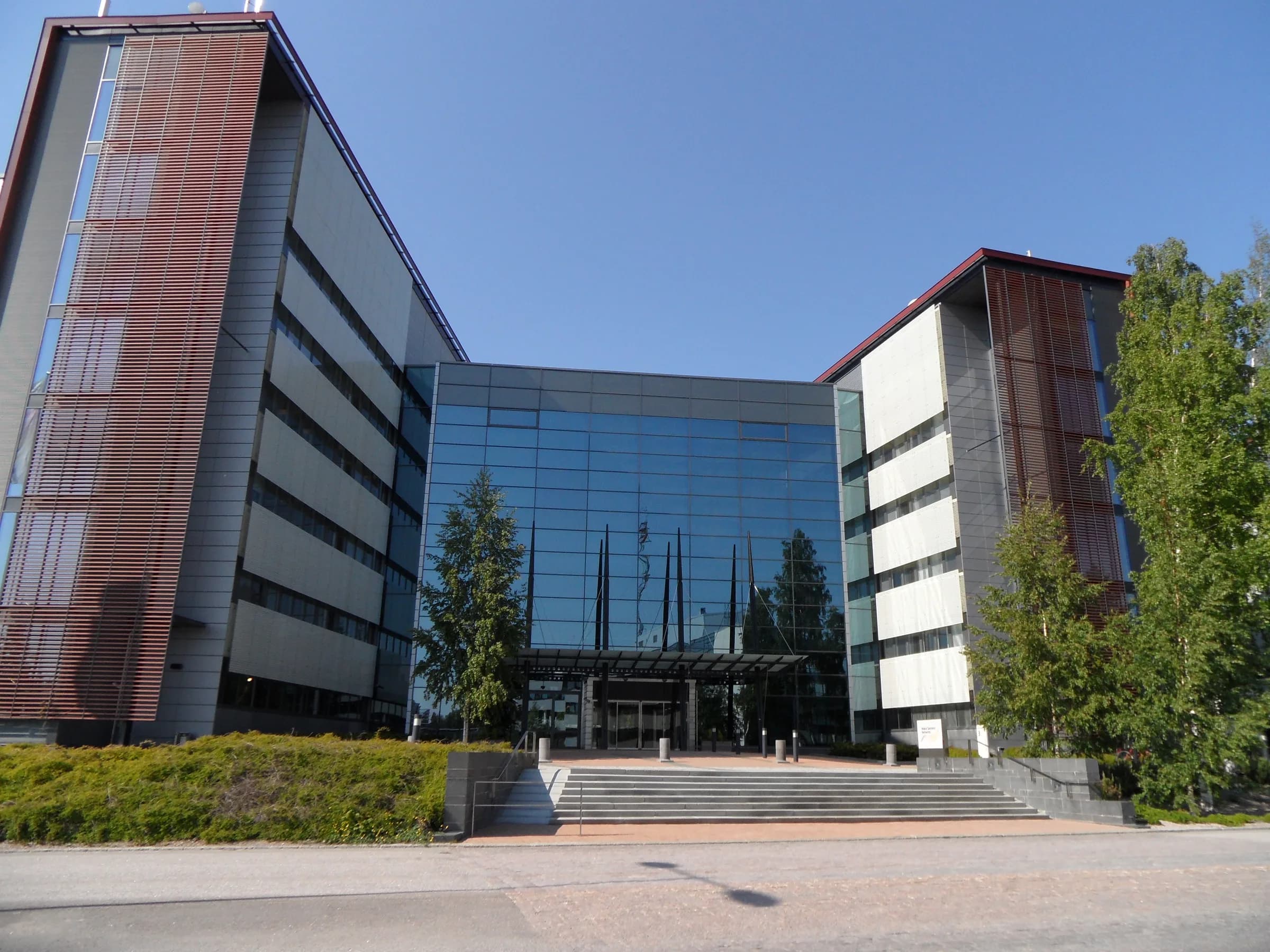
In the last three months of 2007, Nokia sold 40.4 percent of all the mobile phones bought in the world. It shipped 437.1 million handsets in the year, more than its next three competitors combined, and it had been the largest phone maker on Earth for nine years. Its phones were famous for surviving drops and for batteries that lasted for days.
Seven years later, in April 2014, Nokia sold its entire phone business to Microsoft for 5.44 billion euros. The company that had made four in every ten phones on the planet no longer made phones at all. The Nokia name on a phone became a licensed brand belonging to another company.
The usual explanation is that Nokia missed the smartphone. It is not quite right. Nokia had smartphones, it had a touchscreen prototype years before the iPhone, and it had the best engineers in the business.
What it did not have was a software platform that developers wanted to build for, and when it finally chose one, it chose a platform that almost nobody used. The story is not about a company that failed to see the future. It is about one that saw it and still could not build it.
Origins and Early Development
Nokia began on 12 May 1865, when a mining engineer named Fredrik Idestam built a wood-pulp mill on the Tammerkoski rapids in Tampere, Finland. Three years later he built a second mill near the town of Nokia, on the Nokianvirta river, where the water power was better, and the company took the town's name. In 1871, Idestam and the statesman Leo Mechelin turned the business into a limited company, Nokia Ab.
The decisive turn came in the late 1980s, under Jorma Ollila, who became chief executive in 1992. Ollila sold off the paper, rubber, cable and television businesses and bet the entire company on mobile telecommunications, and specifically on GSM, the new pan-European digital standard.
The bet was large, and it was right. On 1 July 1991, the first call on a GSM network was made in Helsinki by the Finnish prime minister, Harri Holkeri, using Nokia equipment. GSM became the dominant mobile standard in the world, and Nokia rode it to the top.
The Rise to Power
Nokia's rise was built on products that ordinary people loved. The Nokia 1011, launched in November 1992, was the first mass-produced GSM phone. The 2110, launched in 1994, carried the Nokia Tune, which became one of the most played pieces of music in the world.
The 3210, launched in 1999, and the 3310, launched in September 2000, became two of the best-selling phones ever made, with the 3310 selling about 126 million units. The 1100, launched in 2003, sold more than 250 million units and remains the best-selling mobile phone in history.
The Decisions That Changed Everything
The change began on 9 January 2007, when Steve Jobs walked onto a stage in San Francisco and announced the iPhone. Nokia's leaders were sceptical, and the numbers seemed to support them: Apple sold only 1.4 million iPhones in 2007, most of them in the final quarter, while Nokia sold 437 million phones in the year.
The iPhone was expensive, its battery life was poor, and it had no physical keyboard, which Nokia's engineers considered essential. What Nokia's leaders did not see was that the iPhone was not a better phone. It was a different product, a computer with a phone inside it, and its value lay in the software and the applications that ran on it.
Nokia's response was to keep investing in Symbian, the operating system that ran its smartphones, while also working on a Linux-based system called MeeGo with Intel. The two efforts competed for attention and resources, and neither produced a platform that developers wanted to build for.
Symbian had been designed for an earlier era of phones, and it was difficult to develop for. MeeGo was promising but slow. By late 2010, Android had overtaken Symbian in unit sales, and Nokia's smartphone share, which had been above 50 percent in 2007, was falling fast.
In September 2010, the board hired Stephen Elop, a Canadian executive from Microsoft, as the first non-Finnish chief executive in Nokia's history. Five months later, Elop circulated an internal memorandum that compared Nokia to a man standing on a burning oil platform, who must jump into the freezing sea to survive. The memorandum, which leaked in February 2011, was a blunt diagnosis: Nokia's platform was burning, and the company had to change completely.
The decision was defensible in a boardroom and damaging in the marketplace. By publicly declaring its current products dead months before Windows Phone devices were ready, Nokia destroyed demand for the Symbian phones that were still its only source of revenue, a pattern known in the industry as the Osborne effect. The Lumia phones that followed could not overcome Windows Phone's tiny application ecosystem.
The Crisis
The crisis was visible in the numbers before it was visible in the shops. Samsung took the top spot in the annual phone rankings in 2012, the first time in fourteen years that Nokia had not held it.
Nokia's overall market share fell from about 30 percent in 2011 to about 24 percent in 2012, and its smartphone share collapsed far faster. The company cut jobs, closed factories and sold assets, including its headquarters building in Espoo, in an effort to stay solvent.
The Lumia phones were the last hope, and they showed both what Nokia could still do and what it could not. The hardware was praised for its cameras, its design and its build quality, and the phones won awards.
But a phone is only as useful as the applications it can run, and Windows Phone had almost none of the applications that mattered. Developers built for iPhone and Android first, and often never built for Windows Phone at all. Customers who bought a Lumia found that the services they wanted were missing, and they did not buy another one.
By 2013, the board had concluded that the phone business could not be saved on its own. The company's share price had fallen by more than 90 percent from its peak, its cash was dwindling, and its credit rating had been cut to junk.
The choice was between selling the business while it still had value and watching it decline to nothing. On 3 September 2013, Nokia announced that it would sell substantially all of its Devices and Services business to Microsoft for 5.44 billion euros in cash, of which 3.79 billion euros was for the business itself and 1.65 billion euros was for a patent licence.
The Fall and Its Consequences
The sale was approved by Nokia's shareholders in November 2013, with more than 99 percent voting in favour, and it was completed on 25 April 2014. It marked the end of Nokia as a phone maker. The company kept its network equipment business, its patents and its mapping service.
Microsoft's ownership of the phone business lasted barely two years. On 8 July 2015, Microsoft announced a writedown of 7.6 billion dollars on the Nokia acquisition and laid off most of the former Nokia workforce.
In May 2016, Microsoft sold the feature phone business to FIH Mobile and HMD Global, a Finnish startup, for 350 million dollars. HMD licensed the Nokia brand and began selling phones running Android, the operating system Nokia had rejected. The Nokia phone, as a product of Nokia, was finished.
The consequences in Finland were deep and lasting. Nokia had been the country's largest company, its largest exporter and its largest private employer, and its decline cost tens of thousands of jobs directly and many more indirectly.
The towns of Salo and Oulu, where Nokia had large operations, were hit hardest. The company that had been a source of national pride had become a case study in how quickly dominance can disappear.
What Remains
Nokia itself remains, and it is a substantial company, but it is a different company from the one that made the 3310. After the sale, it bought the French-American equipment maker Alcatel-Lucent in 2016 and rebuilt itself as a supplier of mobile networks, fibre-optic links and internet equipment. It now makes the infrastructure that carries mobile calls and data, including fifth-generation networks.
The lesson of Nokia is narrower than the usual version, and more useful. The company did not fail because it ignored the iPhone, and it did not fail because it had no ideas. Its engineers had a working touchscreen smartphone prototype with internet browsing as early as 2004, three years before the iPhone appeared. It failed because it could not turn its hardware leadership into a software platform, because its internal divisions competed with each other instead of with Apple and Google, and because the decision to abandon its own platform destroyed the sales that were still funding the company.
That is why the story is still taught. Nokia is not a tale of a company that stood still. It is a tale of a company that moved, chose the wrong direction, and discovered that in a platform market, being second is almost as bad as being absent.
The 3310 is remembered with affection, and the ringtone is still recognised around the world. The company that made them is still in business, but it no longer makes the thing that made it famous, and that is the measure of the fall.